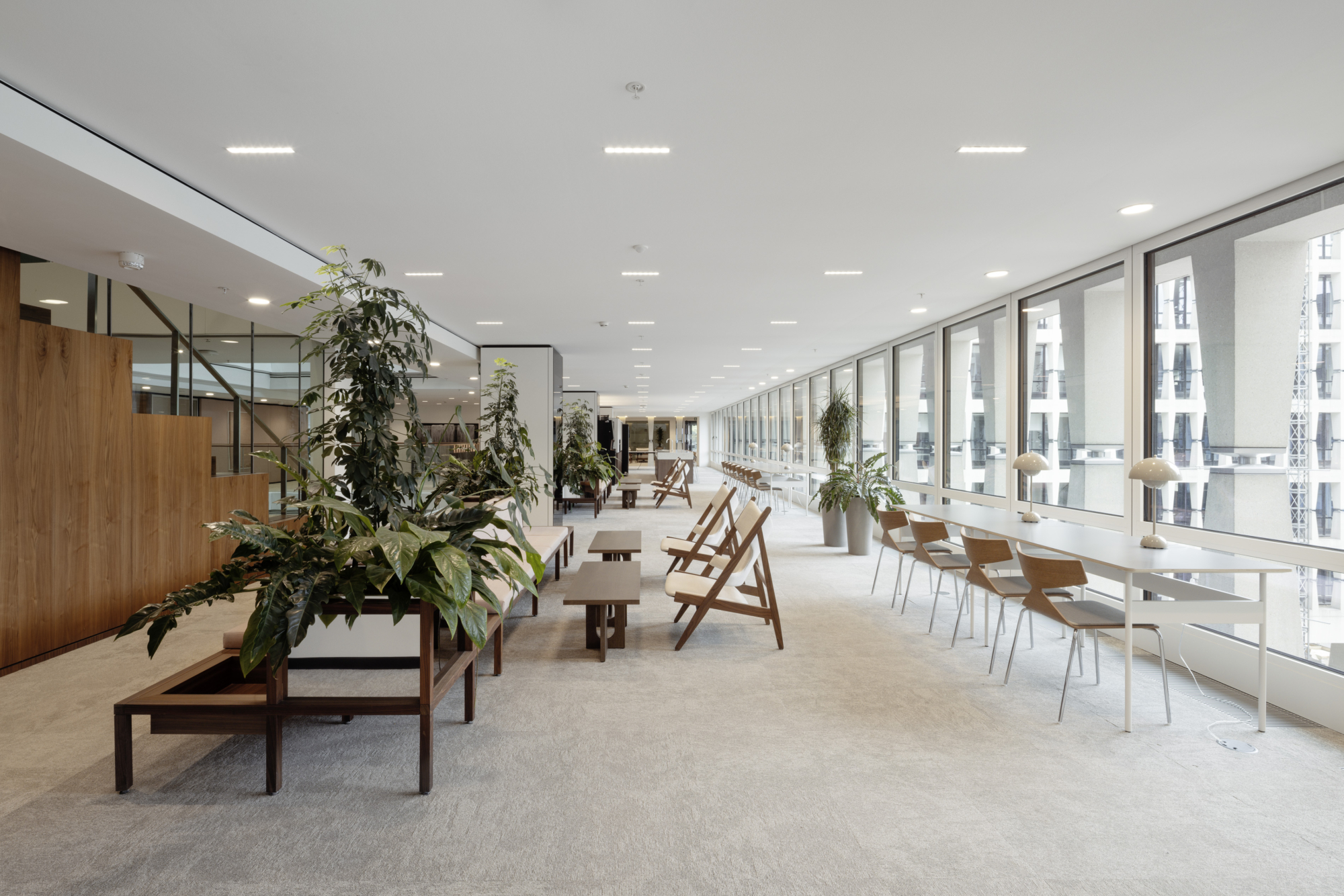
Reshape the way you interact with your surroundings
An interior is always a social device.
We talk a lot about cities, territories, landscapes. But most of our lives happen behind doors. Offices, schools, hospitals, cultural spaces, housing: all of them are interiors that need to be lit, heated, cooled, furnished, cleaned, maintained. Every choice inside the envelope (floor finishes, wall build-ups, acoustic ceilings, partitions, furniture, ventilation) has a weight in terms of carbon, health and resources.
For decades, interior design has been treated as a secondary layer, a matter of taste, branding or atmosphere. Swap the furniture, repaint the walls, change the reception desk, and move on. The result is a silent machine of extraction and waste: short-lived materials, downcycled or landfilled after one lease cycle. High comfort on paper, high impact in reality.
If we take regenerative architecture seriously, we cannot stop at the façade. The way we design interiors either amplifies or cancels everything we claim to do at the building scale.
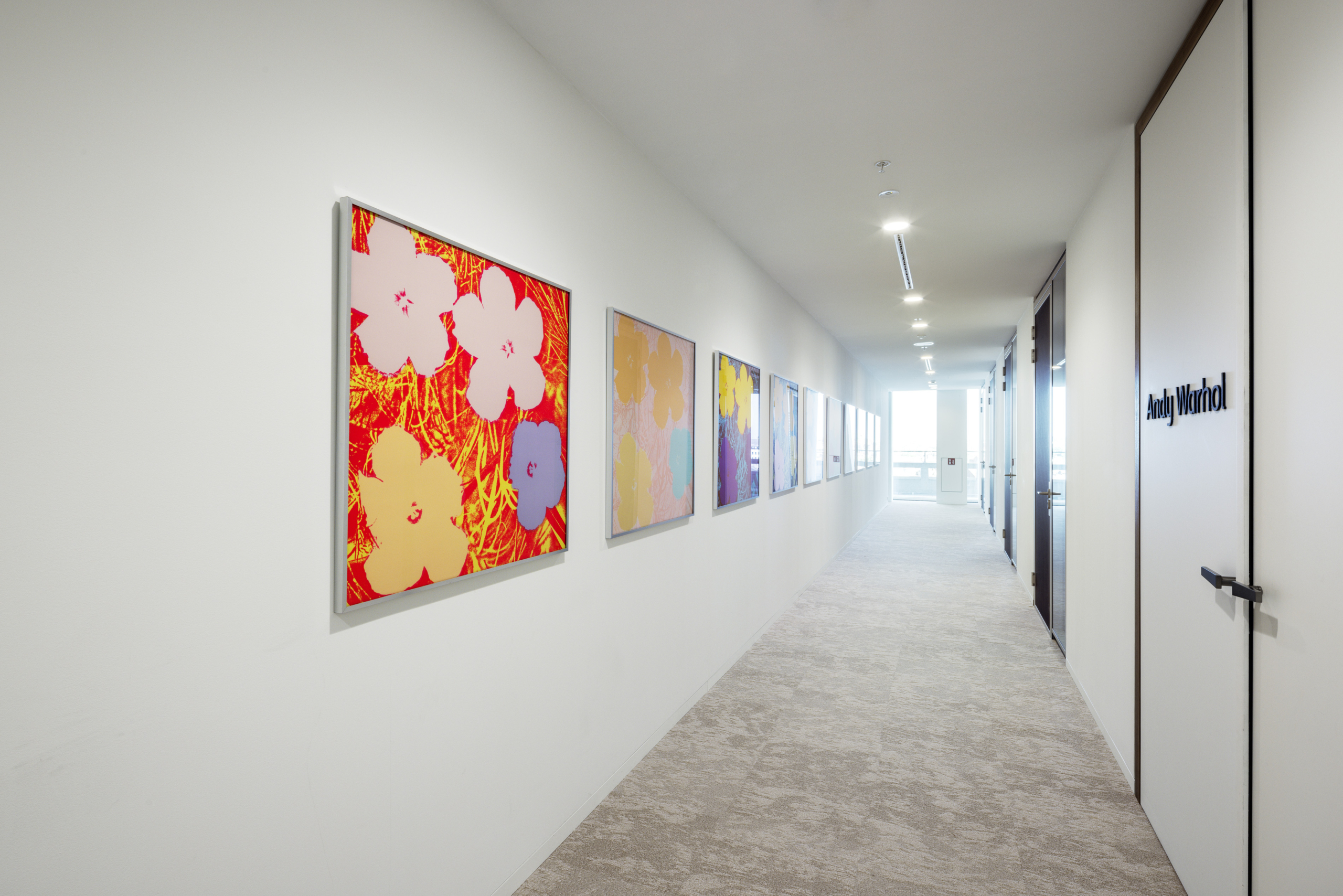
From background to active agent
Regenerative interiors do not behave like stage sets. They work.
They buffer temperature and humidity, improve air quality, soften noise, guide daylight, and give users real freedom to appropriate the space without destroying it every five years.
Instead of asking “What style do we want?”, we start with other questions:
- How can this interior reduce the need for mechanical heating and cooling?
- How can materials store carbon instead of emitting it?
- How can layout and light support bodies, attention and social relations?
- How can we change things later without throwing everything away?
This shift transforms interiors from consumable décor into long-term infrastructure for climate, nature and people.
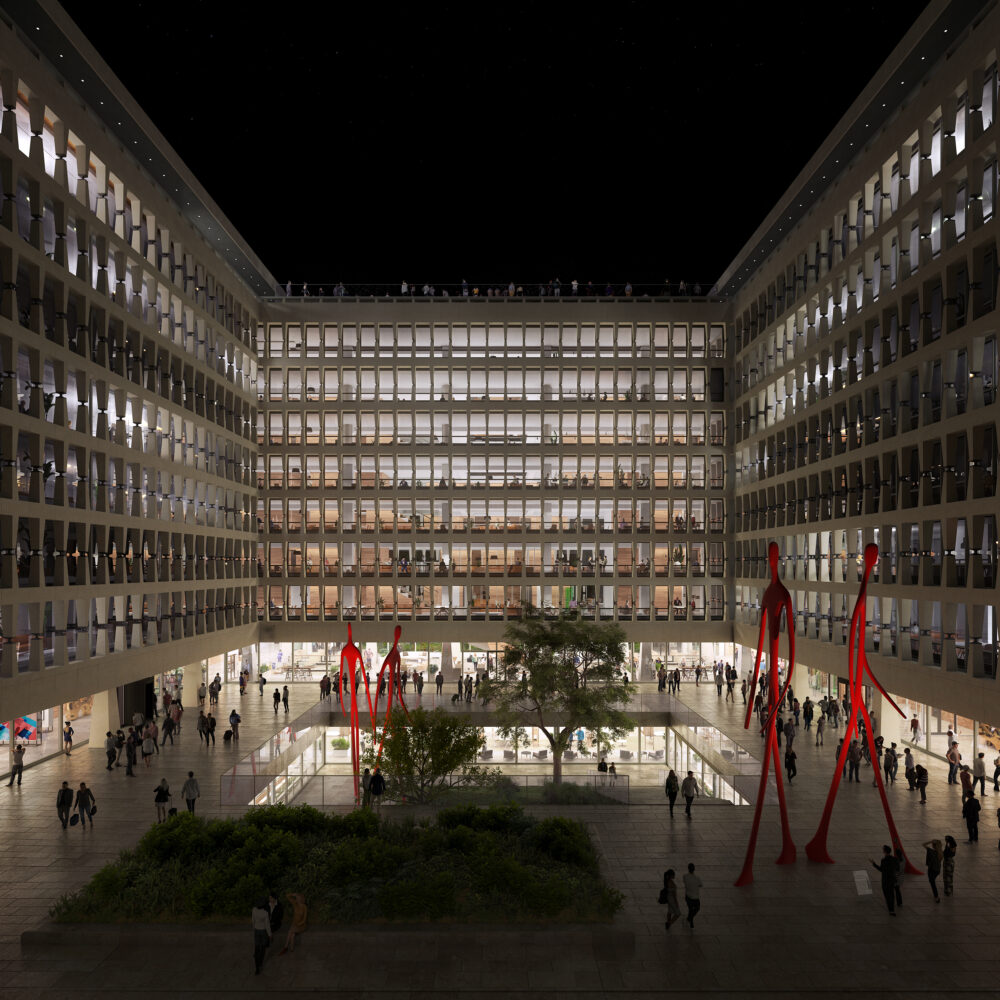
Every design choice can have an impact.
Regenerative interiors for climate
At the scale of a room, climate starts with very concrete things: where the sun enters, where the air flows, how surfaces store or reject heat. A regenerative interior uses these parameters deliberately.
We favour bio-based or mineral materials with thermal mass and good hygrothermal behaviour, reducing peaks in temperature and humidity. We design for maximum use of daylight, not as a romantic gesture, but to reduce artificial lighting loads and stabilise circadian rhythms. We work with zoning, gradations of comfort and adaptive behaviours rather than one uniform, over-conditioned climate everywhere.
Ventilation is not an invisible technical line in a ceiling void; it is part of a coherent strategy that combines envelope performance, air inlets, openings, vegetation and mechanical systems sized for what is really needed, not for habit or fear.
The result: interiors that quietly lower energy demand, while remaining adaptable over time.
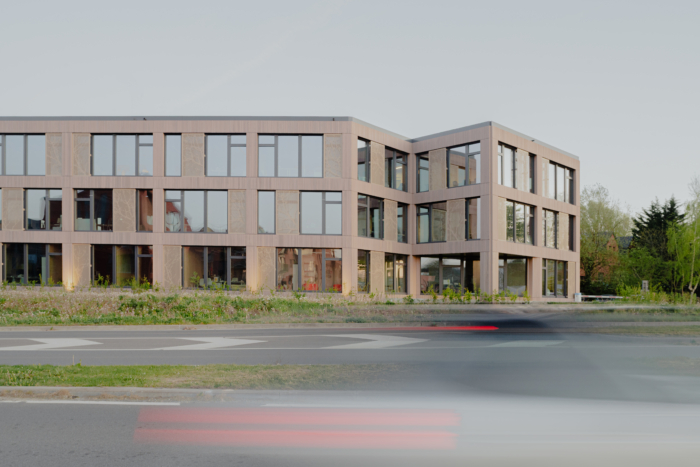
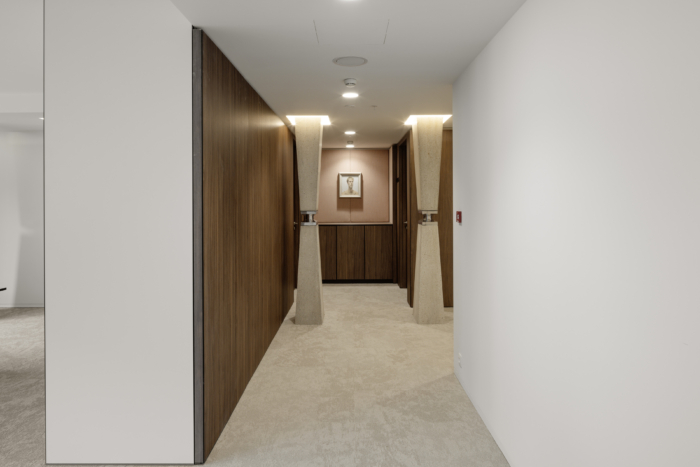
Regenerative interiors for nature
Nature does not stop at the building line. It is present in the origin of each material, in the way we assemble and disassemble elements, and in what happens when we no longer need them.
Regenerative interiors:
- maximise reuse of existing structures, finishes and components wherever possible;
- prioritise bio-based and low-carbon materials with traceable origins;
- avoid toxic substances that pollute indoor air and complicate end-of-life;
- design assemblies to be reversible: screws instead of glue, layers that can be separated, systems that can be repaired rather than replaced.
When vegetation is integrated, it is not a decorative afterthought. It is tied to light, water, maintenance and use patterns. A planted patio, an interior garden, a simple row of trees in a double-height space: all of these can participate in cooling, buffering sound and offering visual relief, if designed as part of the system.
Regenerative interiors for people
An interior is always a social device. It influences how people meet, work, learn, heal, rest and protest. A regenerative approach refuses the opposition between “performance” and “well-being”. It takes seriously what research has shown for years: good daylight, acoustic comfort, clean air, non-toxic materials and flexible layouts directly affect health and productivity.
We use salutogenic principles to design spaces that actively support physical and mental health rather than merely avoiding discomfort. This means offering different types of spaces: quiet zones, collaborative areas, informal meeting spots, transitions, views to outside, routes that are legible and accessible to all bodies.
Users are not the last line in the process; they are involved upstream. Co-design workshops, on-site tests and post-occupancy evaluations help us refine layouts and details so that interiors remain alive instead of being locked in a static state.
Regeneration, at this scale, means enabling people to thrive, to appropriate, to adapt — without needing a full strip-out every time something changes.
What if every regenerative architectural project became a new design for change?
Every room is a decision
At the scale of a planet, interiors may seem small. But every square metre we refurbish is either another repetition of an extractive model, or a concrete step toward a regenerative one.
For us, regenerative interiors are not a niche service. They are the natural extension of our work on regenerative architecture: the place where climate, nature and people meet the everyday gesture of opening a door and stepping inside.
We don’t just refresh spaces.
We use interiors to rethink, redesign and regenerate the way we live and work, from the inside out.
Redesign
Regenerate
Resonate
With every step, one question:
How do we turn our impact into loud,
lasting change?